
St. Louis Waterbeds Search:
Bedroom Furniture
Kids Furniture
Bed Accessories
Steel Frames
About / Articles
Contact / Payment
Mattress & Boxsprings
Memory Foam
Organic / Latex
Waterbeds / Parts
Sheets / Pillows
Storage & Foundations

Will a Latex Mattress With Wool and Cotton Sleep Hot?

Question: I’m considering a natural latex mattress, but am concerned about heat. I was planning to put it on a wooden platform bed that I built.

1. Does the natural latex have a layer of cotton or wool that will help with the heat?  And how thick is that layer

Answer: Sarah, Ours does but they don’t have to. I am not sure what you have read concerning latex and heat, but I can tell you if there are any issues with latex rubber, heat is rarely if ever one of those issues.

Can Wool and Cotton Keep a Latex Mattress From Sleeping Hot?

Will a Latex Mattress With Wool and Cotton Sleep Hot?

The reason for cotton and wool being used on latex is a multi-functional purpose. Cover breathability is something you did not mention in your question and can cause many of the heat issues we experience when sleeping. It sounds as though you are under the impression the wool is there to assist the breathability of the latex? The fact is the latex does a great job on its own. Most mattresses that contain all latex inside of them do so for its sustainability, eco friendly or the more organic aspect.

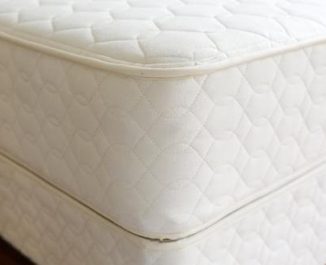
Cotton used in mattress covers can be grown organically, traditionally or transitionally. In the end as you would expect it is very breathable, durable, and of course sustainable. Wool is only now being used much more widely and liberally in mattress quilting construction. The main purpose of wool being added to mattress quilting in today’s beds is again the eco friendly or chemical free aspect it can provide. This is especially true if organic or certified organic wool is quilted into the top mattress cover panel. By doing this, most companies who want to get around necessary fire retardant chemicals can do so, rather than being added  to the mattress components. These chemical fire retardants are controversial but it does allow them to legally comply with recent fire safety laws.

Question: How thick is the wool or cotton layer?

Usually a thick layer of the wool is compressed and when finished isn’t much thicker than an inch or so but this does vary from brand to brand. Savvyrest, Land and Sky are the brands that we chose and I like them a lot. There are other good companies that do the same or similar quilting like Natura, OMI, Green Sleep or Sleeptek

Question:

2. Or would a mattress with coils be cooler/better? (I’m used to futons with foam in the middle, so not sure I’ll like springs.

Answer: The answer comes down to you test resting mattresses honestly. As far is which is cooler I don’t believe coils or latex would make a difference. Durability wise I prefer latex rubber, but latex over coils could offer some cost saving.

As far as putting the mattress on a platform bed I would say half of the beds we install are doing just that. The biggest issue with platform beds is spacing of the slats if you have a platform bed of this design. They need to be spaced two inches or less for proper mattress support.

Thanks Sarah for the great questions hope this will not only help you but assist others with the same questions.

What is Botanical Latex?

Some time ago a customer asked me if we used botanical latex in our organic mattresses…

and our all natural latex mattresses which really threw me for a loop. So I searched Google for the words “Botanical Latex” and sure enough I confirmed my belief. Someone had convinced this unsuspecting customer that 100 percent all natural latex was something different from 100% botanical latex. This question was posed to me in many different ways and most recently yesterday in a price comparison so we have decided to blog the answer. I believe the term botanical latex muddies the waters and creates misleading information. Today we set the record straight:

·    No windy sales pitch about latex rubber
·    No which is best Talalay or Dunlop question
·    No is it 100 percent natural
·    No talking about how it is made

Instead we are going to answer a simple question, what is Botanical Latex?

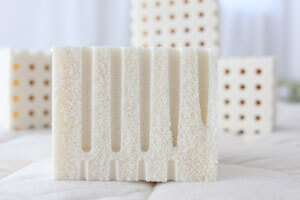
Truth is savvy researchers, I only wish the answer were simple. I will start by defining the word “botany” the study of all types of plants in general and is the word from which botanical is derived.  Botany is sometimes confused with Dendrology, which is the study of only wooded plants. Dendrology may be considered a subcategory of botany, which specializes in wooded plants. So for today’s blog and for argument sake we will be assuming that a rubber tree is botanical. The milky sap is derived from a “rubber tree” or “botanical tree” and is turned into the latex rubber we buy in the form of mattresses,  toppers, and pillows etc.Botanical Latex Dunlop Process Sample

To make these products the industry uses a couple different manufacturing methods to convert the sap into a solid form like a mattress. One of these methods for producing latex rubber is the Talalay processing technique. The other is processed in the Dunlop method of production a.k.a. the original method of producing latex rubber.   Manufacturers call these finished products by many different names, which isn’t important. These many different types of finished products are often defined the following way; All natural rubber, latex rubber, 100 % all natural, synthetic latex or blended latex. The fact is it doesn’t matter what kind it is, if it contains any amount of the  milky white tree sap even a drop then it can arguably be called “botanical latex”. Botanical Latex Talalay Process

Can consumers protect themselves from an industry with no descriptive standards for latex?

Its easy, consumers will want to know how much of the botanical latex rubber is contained in the product they are about to buy. The more botanical natural rubber the higher the cost will be of the end product, the less rubber the more economical the cost will be to the consumer.
How do consumers know how much rubber is in a mattress

• Weight can be one indicator For rubber is heavy
• Ask for a specification breakdown of the bed telling what each layer is made of thickness etc.
• Cost of a good finished 6” all rubber mattress or thicker cannot be purchased for $500 or even a $1000.00. Shop competing models with equivalent specifications. If what you are looking at is significantly cheaper they had to cut cost somewhere. Get the scoop from their competitors; they are often glad to share the reasoning for price differences.
• Do your homework and don’t just listen to a sales pitch. Mattress Forums, mattress manufacturers, and former customer’s reviews can be good sources for information.
• If the bed containing botanical latex is using organic materials like certified organic wool and cotton you can expect cost to be more.

Why Do All Natural Latex Rubber Mattresses Cost So Much?

Most industry insiders would consider all natural latex rubber to be the Roles Royce of mattress making materials and along with quality often comes higher prices, but is that really true?

The fact is all natural rubber mattresses don’t cost any more than other

so called top of the line premium mattresses like the Sleep Number Bed from Select Comfort and Tempur Pedic memory foam. It is true you won’t be able to buy one for the same price as the average queen size mattress set of $799 or $899 and your not comparing apples to apples. When a person compares like mattress and their price point, the similarities end. Quality latex mattresses are pack a lot of wallop for the money spent making everything else look like sour grapes.

All natural mattresses can and do often last up to 20-30 years and in some cases even longer.

This kind of useful life for a mattress is something that the average queen or king conventional pillow top mattress can’t do. Walk into most any retail store today and you will see brand name airbeds, visco elastic memory foam and conventional inner spring mattresses for $2000- $3000-$4000 or possibly even a lot more. Our suggestion is to put these mattresses to the test and really compare the differences.

One test you can give the mattresses is the weight test and when you investigate you will easily take notice of the differences in weight. Mainstream mattresses are typically half as heavy when compared to all natural-latex beds because they are using far less steel than even a few years ago. They have replaced the steel with low grade foams and padding materials. In the case of air beds well… the weight is much less and these seamed air bags are notorious for their numerous amount problems.

Delve into all natural latex rubber and we can begin to realize that it is not about price gouging as some believe, rather it comes down to production or manufacturing cost issues that are unique to an all natural rubber mattress. Natural rubber is not a petroleum-based product unlike synthetic foam which is. Rubber originates from the sap of a rubber tree, which takes 5 years to grow to production age, and usually ends at 20-30 years. Each tree only produces 3-5lbs of latex a year. It takes the production of 2000-2500 trees on 10-12 acres and 8-12 tappers one day to produce enough latex for one queen size mattress. These rubber plantations can cover tens of thousands of acres with millions of trees.

The quality of today’s rubber mattresses can vary greatly.

Blending the natural rubber with synthetics made from chemicals or fillers like sand and clay clearly cuts production cost but it also sacrifices the overall quality of the final product. Mattresses that use less rubber by replacing it with inferior foam layers or cut the quality of the rubber by using fillers sometimes appears to be as good through deceptive marketing and in the end the consumers are the losers. They don’t have the same feel and life expectancy of all-natural latex rubber and even worse many of these come from china where quality standards are not as high.

Benefits for these mattresses that cost no more than a high quality mattress
• Much longer life
• The resiliency an elasticity of rubber
• Conformity of rubber which can shape to the body’s natural curves
• Virtually chemical free
• Sustainable
• Biodegradable

So is it really cheaper or is it better to buy three mattress sets or more within 24 years? Is it ok to waste landfill space needlessly with products that don’t decompose? We believe for little if any additional cost people will reap the aforementioned benefits by purchasing just one mattress made of all natural latex rubber that can pretty much do it all? Simulate it to any high quality pair of shoes or a well engineered automobile because in the end one way or the other we will all pay the price.

Learn More About Latex Bliss Mattresses

Pure Latex Bliss is a different kind of mattress.

What do you know about Talalay Latex Rubber and Dunlop Rubber?

a. There are two typed of latex used in bedding, Talalay & Dunlop
b. All latex is not created equal

Pure Latex BLISS™Uses Talalay all natural rubber in their mattresses which have No cushioning materials like

  • Foam
  • Fiber
  • Quilt

This equals long term durability and virtually no body impressions.

See our Pure Latex Bliss line of BedsNo Foam

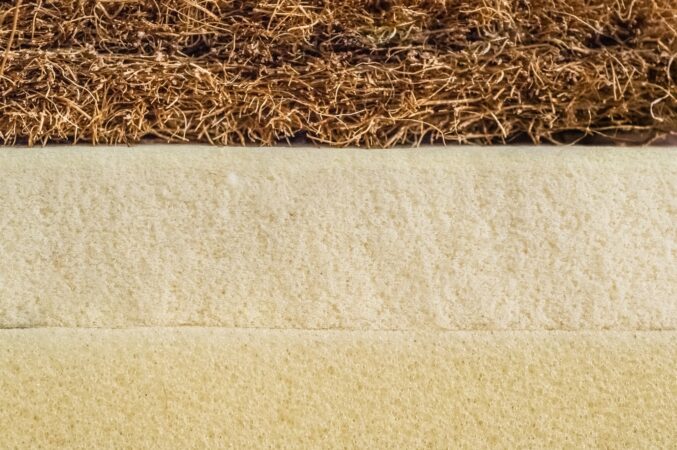
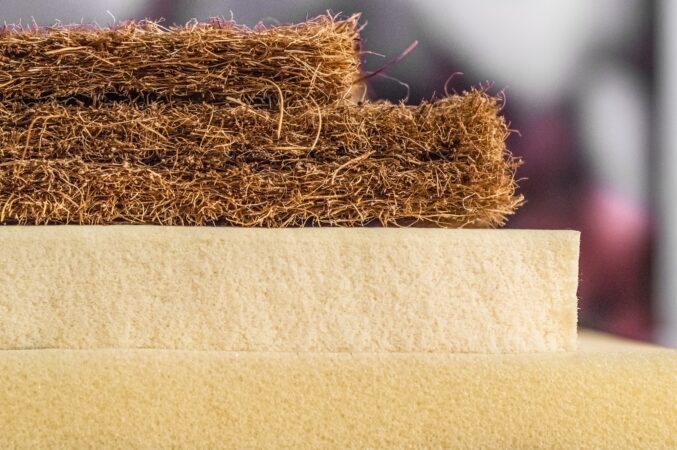
Polyurethane foams, including visco, are made entirely of petroleum products and are essentially plastic.  The cell structure of foam is not elastic like latex and breaks down with use creating sags in the mattress.

No Fiber

Fiber which is used by manufacturers is comprised mostly of air, it is used to create a soft feel but its’ life is limited.  During use it flattens out and this is the primary cause of body impressions.

No Quilt

Quilting reduces the ability for the cover to stretch.  Stretch in the cover material is essential for allowing the layers below to accommodate body contours to the maximum extent for mattress contouring and leading to better support, pressure relief and comfort.

What Does Comfort REALLY mean to you? How do WE define it?

  • Bottomless Pressure Relief
  • Uplifting Support
  • Which = two dimensional rather than one dimensional (like all others)

Bottomless is the experience of NOT feeling the THUD of your body hitting the next layer of material below.

Bottomless reduces pressure, which reduces tossing, and turning.

Uplifting is the feeling you experience as your body nestles into the latex, it’s kind of like floating or a feeling of buoyancy.  “Uplifting” promotes proper posture and body alignment.”

Take Pure Latex BLISS™ Bench Test

  1. Sit on naked bench
    No pressure relief.
  2. Sit on a poly cushion
    The equivalent polyurethane foam material found in most mattresses = very little pressure relief.
  3. Sit on visco/memory foam cushion
    You will notice that you still bottom out, only slower.
  4. Sit on latex rubber cushion
    You will notice right away that you don’t bottom out and that it offers a floating feeling.  This sensation is bottomless pressure relief & uplifting support, which only occurs from Talalay latex rubber.

This noticeable difference of floating or buoyancy is actually Bottomless & Uplifting, for most people it is the true interpretation of COMFORT.

Are You Sure That Is An All Natural Latex Mattress You’re Buying

They told me I was buying a Latex mattress!

It only makes since that when you go into a store and ask for an all natural latex mattress that’s what will be sold to you, but regrettably that’s not always the case. It seems not all retailers are up front about the products they sell. Recently advertised I saw a latex mattress that was 12 inches thick and was claimed to regularly sell for $1000.00 but it was on sale for a mere $399.00 interested in what I would get for such a measly investment. The salesman seemed to know nothing about the bed and after looking at the description attached to the  mattress I found it was built with only 1 inch of latex and 11 inches of additional cheap filler materials.

Good quality latex mattresses cost $1500.00 and up which some people might consider a bit pricey and at first glance that may seem like the case, however when you consider they are very eco friendly in make up, that they can potentially last up to 25 maybe even 30 years, its not hard to see why they are usually considered the best built mattresses in the industry today offering a true value and money well spent.

So what’s the problem when stores claim to be selling latex mattresses cheap?

Claims of sustainable, durable, and organic are widely marketed and are impressive buzz worthy terms that can be misleading. Just because the bed has a layer of latex or two doesn’t make it stronger or even eco friendly for that matter. The fact is if it mostly contains low quality non replenishable petrol based polyurethane foams that develop body impressions, wear out quickly, and contain potentially harmful chemicals.

Advertising 12 inch thick latex mattresses that include a measly 1 to 2 inches are impressive to look at but are nothing more than marketing gimmicks.
We sacrifice durability by replacing what would normally be 6 or 7 inches high strength tempered steel coils with cheap low grade filler materials like polyurethane foam, fiber fill, and yes even a couple inches of latex. So much for the good deals we call these latex mattresses, latex hybrids because they are a mixture of cheaper material rather than durable latex rubber.

Shopping all natural latex do you know what you’re buying?

I wish I could say, “Case closed” and there is nothing else to this issue of latex mattress shopping but there is more. If a person is assuming that just because they are buying latex that it is all natural or even organic they best do a little more research when it comes to the purity of the latex. Whether you are purchasing one of 2 types of latex Dunlop or Talalay latex, make sure to get the best you can afford. Fillers and extenders are often used to reduce costs and as a result can compromise durability and life. There are also synthetic blends claimed to be as good but usually are not. Ask about the mixture which is commonly believed to significantly comprise the mattress’s life.
 
They can be 30% natural rubber and 70% synthetic rubber which have more chemicals and fillers that will not last as long. Our recommendation is layers of latex from top to bottom of the mattress, nothing else. Latex with no fillers, extenders. A latex mattress with no foam layers and fiber layers for cushioning, just a great combination of your favorite firm, medium, or soft latex foam rubber layers. This is what a real latex mattress is and it will give you the longest mattress life, most comfortable sleep, and earth friendly mattress you can buy.