

St. Louis Waterbeds Search:
Bedroom Furniture
Kids Furniture
Bed Accessories
Steel Frames
About / Articles
Contact / Payment
Mattress & Boxsprings
Memory Foam
Organic / Latex
Waterbeds / Parts
Sheets / Pillows
Storage & Foundations

Top 10 Problems With Tube or Cylinder Type Softside Waterbeds

Many purists do not consider a Tube Type Waterbed a true Waterbed rather they consider it a hybrid waterbed. This is the beginning of our two part blog that highlights the ten things we consider to be the biggest problems with this type of water bed.

1. Tube Beds do not feel like a deep fill waterbed.
It does not form to the body the way waterbeds that are 7 inches or deeper do.  Deep fill waterbeds are much better at relieving pressure points on the body and decreasing tossing and turning than tube beds.

2. Softsided systems like the tube bed are usually too firm for most waterbed lovers.
They can feel as firm as a regular spring mattress, not providing the full body support of a waterbed.

3. Tube type waterbeds usually are not heated.
Adjustable heat is the one thing most waterbed owners want yet many tube beds don’t have them. Most tube type waterbeds are designed with a thicker top cover to insulate and eliminate the need for a heater. If a heater is used it must be a low watt heater to keep the bed from overheating or even possibly burning out.

4. Trying to find where the leak is located.
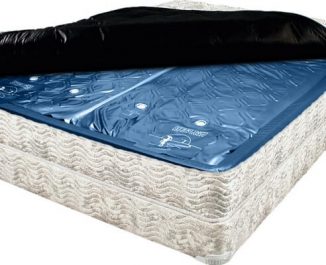
With 8 tubes in a Queen mattress and 10 in a King mattress, each must be examined very closely. Many times it is one of the 8 or 10 cap and plugs that can leak and they must be replaced. If the leak is found in the vinyl of the tube, we recommend replacing the tube. Repairing in tubes can be tricky because leaks are usually in high stress areas due to their design.  It is common for them to fail around a seam or the valve making it nearly impossible for a patch to stick and contain water.

5. Tubes / cylinders are awkward and hard to fill.
Tubes are usually filled in an area close to a water source and then carried into the bedroom and placed in the bed. Each tube should be filled to the same level. This means holding the 60 to 100 lb. tube erect which is very heavy and very awkward and filling to the fill mark on the tube itself. This is contrary to the sales pitch many sales associate provide suggesting that they are easy to fill, drain, and move. These same people usually have never installed one in a customer’s house much less attempted to fill and get the water level precisely the same so comfort is not affected..

6. Lack of core support from the multiple water mattresses
Look at the fingers on your hand and tightly pull them together. This is basically a simplified demonstration of the core support in a tube bed. The gaps in your fingers are no different from the gaps in the tubes that are lacking to properly support the sleeper. Over filled tubes exaggerate the problem and layers of foam in the cover disguise the problem.

7. Top covers can and do break down quickly.
One of the most common problems next to tube failure in these water log designed beds is that the cover of the mattress breaks down. Mattress covers are over filled with materials to insulate sleepers from what is usually considered a non heated waterbed. They usually have 4” or more of padding and foam and frequently breakdown and compress much like a fluffy pillow top mattress. Covers are not standardized or cheap to replace.

8. Finding the right size replacement tubes can be tricky.
Tubes are not standard in length and must be the correct length or they will rupture at the end seams of the bed. Some tubes are round while others are more squared off. Always take the old tube with you when you are shopping for a replacement tube to make sure you’re replacing it with a proper replacement..

9. Baffled or fiber filled tubes can be very hard to drain.
This baffling is usually an open cell foam. This foam acts like a giant sponge making them hard to extract the water from. If the baffled tubes are not handled carefully the foam can be torn. It can also shift out of its correct position or get balled up inside the tube. These tubes can cost up to 50% more than a free slow tube to replace.

10. Free flow tubes don’t have a very long life expectancy.
These cylinders have a tendency to give the bed a bucking motion. The water races the length of these tubes when pressure is exerted on the opposite end, which stresses the end seams and can cause a seam failure.

Somma is probably the most recognizable brand name of tube beds sold. Don’t get us wrong many people have enjoyed these beds over the years, however our 24 plus years of handling their service issues is the reason we are not big fans of their design. At STL Beds we have limited our sales of them and even removed them from our showroom floor. Their high failure rate, lack of support, durability and the fact that they feel nothing like a true waterbed puts them at the bottom of our recommendation list. Our suggestion is to consider a true deep fill softside waterbed. If your response is that tube waterbeds don’t feel like a waterbed then I think you can see why we believe the tube bed is a hybrid bed with a lot of troublesome issues making nearly any other mattress a better option.

Top Ten Benefits of a Tube Softside Waterbed

1. Tube or Cylinder beds look and make like a regular mattress and box spring.

This might seem obvious but people choose tube soft side water beds because they use sheets and bedding found at any store in all the familiar sizes. They even adapt to conventional beds but do not look like a 1970’s water bed

2. Softside Tube Waterbeds weight less

A big complaint of flotation beds is the waterbed weight, which can go as high as 2000lbs in a King size Hardside Waterbed. However a king size tube bed can weigh in at only about 700-800lbs. Most are in the 4” depth range where as a deep fill soft side can range from 6”-13” with 7”- 8” being the most common cavity depth.

3. Moving a Tube Waterbed is much easier than traditional waterbeds.

With 10 tubes in a king and 8 in a queen, the individual tubes weighing 60-80lbs can be removed from the bed without being drained and moved as individual pieces.

4. Easy to assemble.

You just put the foundation and the shell of the softside tube bed on a proper bed frame and lay the individual tubes in it. If the bed is not quite where you want it just remove the tubes and slide the bed to where you want it and place the tubes back into it with no draining or filling it.

5. Filling tubes does require running a garden hose through the house.

You can fill your tube in another location such as a bathroom or outside so you don’t have to worry about spilling water in the bedroom.

6. Delivering the bed with the tubes already filled.

This makes for a quick delivery and no worrying about a water source in the customers’ home.

7. You can adjust mattress firmness.

Varying the amount of water put in the tubes can change the feel of the mattress or firmness from side to side. Baffled tubes can be purchased that can stop the motion and make the bed much firmer.

8. Determining which tube has a leak is easy and replacing it is even easier.

Usually if a tube has been leaking one of them will have less water than the others. Simply repair or replace the bad tube. 1 Free flow tube costs $20-$30 and baffled tube can cost up to $40. Replacement waterbed bladders for a deep filled bed can cost hundreds of dollars.

9. Does not require a waterbed heater.

An extra thick cover is used to insulate them. If a heater is used it must be a low watt heater made specifically for a shallow fill or tube bed.

10. Tube waterbed cost less.

This is not always the case but tube beds generally speaking usually offer a firmer feel for less money than a deep fill baffled mattress.

Top 10 Things To Look For When Buying a Used Softside Waterbed.

The Softside Waterbed is the 2nd generation of waterbeds and is a major improvement over the old wooden framed hardside waterbed stores used to sell in the 1970’s and 1980’s.

If you are considering buying a used soft side waterbed there are a number of things to beware of when buying a used one.

  1. First examine for water damage and mold. Many times the foundations have cardboard and other light duty materials that can be seriously damaged by water. These materials are often used on the topside or the deck of the foundation. Sometimes this can be replaced.
  2. Top Ten Problems to look for if you buy a softside waterbed used.

  3. If the quilted cover is water stained it is usually not a big deal but do beware of mold, which can be a bigger issue. Most covers cannot be machine washed because they contain polyurethane foam. The few that can be laundered should never be put in a dryer instead line dry them. You may even want to contact the manufacturer for cleaning instructions if they are not present on the cleaning instructions label. Don’t assume you can just go out and buy a new one because they aren’t standardized and can easily cost over $1000.00 assuming you can find the correct cover to fit the bed.
  4. If the cover has a zipper make sure it is in good working order with no missing teeth or stitching that is coming undone.
  5. Mattresses for softside waterbeds are not standardized; there are many cavity shapes and sizes. Softsides have ranged from 4” deep to 13” deep over the years. Some have tapered or slopping sidewalls in the cavity while some are straight up and down. The length and width of the cavity can vary as well. Before buying one used make sure that you can find a company that sells the replacement bladder that will fit.
  6. Make sure that the baffling, fiber, or whatever was inserted inside the waterbed mattress is flat and straight. If it is bunched up in a ball or wadded up chances are it will not be able to be straightened to the point where the mattress will once again feel supportive.
  7. If you need to buy a new softsided waterbed bladder try to get an industry brand name, model off the tag, or at least the measurements of the inner cavity dimensions in order to assure a good fit.
  8. If you are considering a free flow mattress most brands today do not offer free flow bladders as an option for replacement, but there are manufacturers that can make them like SPS. Many manufacturers do not recommend them, especially in the shallower cavities under 8 inches deep.
  9. Foam side rails should be examined. If they are deformed, warped badly, or just plain broke down with age it is best to take a pass on the bed because they can be expensive to replace and they must be exactly the same. Some can be replaced if still in production. Some rails are in one-piece tub configuration and may be even be harder to find and replace.
  10. Be sure to inspect the waterbed heater or heaters if it has dual mattress chambers. Softside waterbeds usually require a low watt heater made specifically for softside waterbeds. If the bed is 8-10 years old replace the heater.
  11. Inspect the safety liner. We normally recommend not taking a chance on using the old one. These are inexpensive to replace and are often broke down, split out in the corners, or cracking from age.

Top 10 Tips for Buying a Used Hard side Waterbed

Considering buying a Used Hardside Water bed?

With today’s economy, people may not find a new hard side waterbed within their budget. Due to their lower cost on places like Craig’s List, classified ads and garage sales a used bed may be a very attractive alternative choice or is it? Today’s blog offers a few tips for buying a used waterbed that are important to know or you could end up spending as much money on a used waterbed as it would cost to buy a new one.

Shopping Used Hard side Water beds, what to look for.

  1. Old mattresses more often than not are prone to leakage. It is very common that they become damaged while moving them due to vinyl deterioration causing cracking and failure.
  2. Most of the time the heater is bad or will be after it is handled while moving. Heating elements become weak with age and fail.
  3. Check the safety liner. These are usually shot.  Often the sides are broke down or the corners are split out. If this is the case replace it immediately. This is the last safety measure in place to prevent leakage from escaping the waterbed frame.
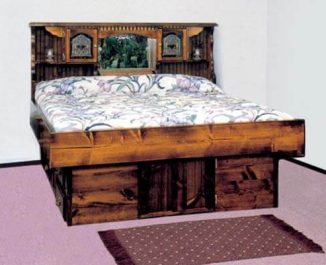
  4. Headboards, frames, and drawer pedestals are often great buys and a fantastic way to save hundreds of dollars. Then a person can buy the new guts for their bed. In the industry it is called a mattress package.
  5. Check the box pedestal for water damage, broken or missing parts. If you are buying a drawer pedestal check also for damage, broken or missing drawer guides and inspect the cabinet for structural integrity, Staples and screws pull out, can it be refastened or reinforced.
  6. Inspect the waterbed decking (plywood) for water damage, severe warping or broken pieces. Decking is cheap to replace, you just have to cut it to size.
  7. Examine the 2 x 10 wood frame. Make sure the boards are not warped or twisted so bad they cannot be reassembled. Also inspect for bad cracks. It is best to use new wood screws when reassembling.
  8. Don’t forget the headboard. If it has lights, do they work and is the wiring in good condition. Broken mirrors are hard to replace. They do not come in standard sizes.
  9. If the wood frame or headboard is scratched it is amazing what you can do with a bottle of Old English wood cleaner or a little wood stain to make that old bed look new.
  10. Be sure to get online or go into a showroom and verify what similar beds sell for new to assure you are not over paying.
  11. Bonus: If the waterbed comes with a baffled mattress, be sure that the fiber or baffles are flat and straight and that the mattress is vacuum-sealed like a package of freeze dried food. If the materials are shifted and balled up it is very likely the baffling system is ruined and will definitely never perform like it once did.

Waterbeds can hold as much as 220 gallons of water which is one of the most destructive forces know to man. Imagine if it were let loose in your house because of weak or faulty parts and pieces. The cost to repair the water damage could far accede the savings of purchasing a used waterbed, so know what you are buying.

Can You Put a Soft Side Waterbed on Drawers?

Most of the time soft side water beds can be placed upon your old water bed drawer pedestal.

Worries of damaging the pedestal due to weight should not be of concern because they weigh 20-25% less than a hard side water bed. If you don’t have drawers from an old water bed adding additional storage space to your bedroom is easy. There are many companies that make storage systems for mattress and boxsprings that are strong enough to support the more conventional looking softside water beds. These conventional drawer pedestals work well at utilizing unused space normally only taken up by the mattress set. One such brand is Furniture Traditions who makes a platform bed pedestal. Another brand is Seahawk Designs Sto Away Drawer Foundations. Both will accommodate a soft side waterbed mattress. There are other brands that will do this so if you are not sure ask the retailer or go to the pedestal manufacturer.

Sto-A-Way Mattress Foundation with Drawers can be used under a Soft Side Waterbed
Softside waterbeds can be used with and without foundation on The Furniture Traditions drawer pedestals which for example are available in two heights 9” or 14”. The final overall height you want will determine whether or not you use the 9”softsid foundation. Overall height of pedestal and mattress can range from 18” high up to about 36” high.  Pedestals generally range from 9” to 18” high. This height would be added to the height of your mattress and foundation which usually run from 18” to 21” high. A softside water mattress only usually runs from 9” to 11” tall.

Use drawers under your softside waterbed to take advantage of usable space by means of a Platform bed

Furniture Traditions Platform bed with under bed drawer storage

The major consideration in determining the proper height of the whole bed is that it will not hide the headboard you are setting it in front of. Many drawer pedestals come with a platform which has a 1 ½ -3” trim or boarder around it. If you do not have a platform you can use 7/16” OSB or plywood on top of the Pedestal. We determine the outside length and width of the mattress set and then cut the OSB about 2” short of the length and width of the mattress. Next we screw it down to the top of the pedestal so it forms a stable platform for the waterbed mattress and or foundation. Under sizing it will keep the rough edges from being seen when the mattress is set on it. A conventional spring mattress could be placed on your waterbed pedestal as well. If it moves around on the top of the platform place several large pieces of  rubberized shelf liner under you mattress to stabilize the mattress so that it will not move.

The moral of the story is don’t be too hasty in getting rid of your old waterbed drawers. They might have a second chance at life by being recycled through reuse.