


St. Louis Waterbeds Search:
Bedroom Furniture
Kids Furniture
Bed Accessories
Steel Frames
About / Articles
Contact / Payment
Mattress & Boxsprings
Memory Foam
Organic / Latex
Waterbeds / Parts
Sheets / Pillows
Storage & Foundations

Hard Side Waterbed Mattress Alternatives

If you like the old fashioned waterbed and you’re afraid to leave it for fear that you may never get comfortable again, you are not alone. One of the most comfy beds I ever owned was my hardside wood framed water bed. Sure there are the naysayers who say out of style and that they are bad for your back but the truth is many people who leave their water bed never seem to find such cradling comfort or support again. So the question is what is a good alternative bed that can match the feel of those old 1970’s hard side waterbed classic?

Hard Side Water bed Mattress Alternatives

Hardside Waterbed Mattress Alternatives

Substitutes / Replacements for hard side waterbeds:

Soft side or Soft Sided Waterbeds

Soft sides have the look of a regular mattress and boxspring, used regular sheets and bedding and can adapt to nearly any headboard or headboard footboard combination offered today. Softside waterbeds are easy to get in and out of not to mention when it comes time to break it down and move it, let’s just say a softside is a dream.  Mattress or bladder choices for these beds often range from free flowing to no movement at all and can include total head to toe body support.

Waterbed Inserts

Waterbed inserts are special fitting soft mattresses that give overall body support – and you can keep your hard wood frame, headboard, and waterbed sheets that you already have.  The only thing left is to choose a mattress. Custom designed to fit within the wood waterbed frame, the waterbed mattress insert can be made just like a regular mattress, using memory foam, or even latex rubber. The key is to make sure that the sizing is slightly smaller than the frame itself leaving just enough room to make it in the morning before leaving for work. One last note people having slept on water for years usually prefer softer more luxurious mattress tops and firmer core support, so be sure to test rest your insert for the optimal body fit.

Mattress Sets

Whatever kind  of mattress you choose brand name or not be sure to select one that offers firm support and has a soft cushioned top that mimics waterbed feel. The biggest complaint of former waterbed owners is that their new mattress is too firm. The other objection is that they would rather not have to buy a new headboard for the set. This is easily done by simply purchasing headboard legs or making them out of the old waterbed frame. Nearly all the mentioned mattresses below can then be positioned in front of it like any other book cased headboard.

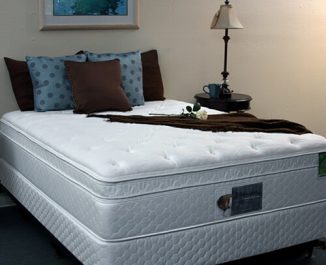
Mattress and box spring

Pillow top versions work nicely and can sometimes cost less than the next recommendation. Our waterbed alternative of choice is a mattress with two sides that can be flipped over, they last slightly longer. Adding a mattress topper can simulate the feel of a waterbed and it’s more like the feel the waterbed owner seems to long for. Look for latex rubber toppers or memory foam toppers with lower ILD’s which are softer. ILD correlates to the firmness or softness of a piece of foam or rubber.

Memory Foam

Airbeds

Latex foam rubber mattresses

All 3 of the previously mentioned are good choices that can simulate waterbed feel. Above in the Mattress and Boxspring nearly all the same applies to memory foam, air, and latex although two sided is not applicable to these in most cases. Questions give us a call 1-888-785-2337 or Contact Us.

How Do You Burp A Waterbed?

How Do You Burp A Water Bed?

Photo: A Nightmare on Elm Street 4: The Dream Master

How Do You Burp a Water Bed?

Remember the movie Nightmare on Elm Street 4 when the character Joey saw someone inside his waterbed mattress. It turned out it wasn’t who he thought it was and he ended up getting killed by Freddy Krueger  who was popped up from inside of it? This got me thinking about noisy waterbeds.  OK that noise your hearing in the waterbed…hint it’s not Freddy, and it’s easier to get rid of than Freddy.

What’s that noise in my waterbed?

So when people ask if there are really things that go bump in the night you can tell them no, but if they ask what’s that noise in their waterbed mattress just tell them the water bed needs to be burped.  How do you know when to burp a waterbed? It will tell you.  Noise is a result of sloshing water within the mattress air pockets. Many people even complain that the bed becomes less comfortable to sleep on as well. Mattress ballooning another similar issue and is usually a result of an overfilled water mattress and it can make burping a bed harder. A side note: the mattress does not have to be transparent to tell if it needs to be burped.  The vinyl should be resting flat with a few wrinkles in the top, irregular surface blisters, and air pockets should be expressed.

So how do you burp the air out of a waterbed?

The process for removing this noisy nuisance isn’t scary, but it will keep you awake if you don’t remove it and the best part is you can do it. You wont’ have to hire a professional. We simply pull up the valve in the up position, remove the cap and plug that seal the mattress. We then lie across the bed at the headboard end and slowly roll toward the foot end of the bed where the valve is. If you have a helper have them lift the valve up a couple inches away from the water so that the water will not erupt out or spill out the opening as you herd the air bubbles towards it. A broom handle or something similar works as well, whichever method you choose the key is to herd the air pockets and bubbles toward the valve removing the air. Repeat the process till all the air is gone and be sure there are no sharp points on what ever you use. Replace the plug and cap and you are finished. If you have a tube bed lift the valve, take the cap off, and slide your hand the length of the tube herding the air out of the open valve and then recap it. You can repeat this process for each tube.

How often you burp your waterbed?

This depends on how much air is in the water you filled it with. If you flush the air from the garden hose, take the plug out prematurely or the water company has aerated your water it will require more burping. The reason we have to keep burping a waterbed mattress for years is because water is part oxygen and some of that oxygen will collect and form bubbles, which need to be expelled or expressed out of your bed, by burping the bed it will make it more comfortable.

There are products made to emulsify the air bubbles but we have found that they foam and can be messy when trying to drain the beds so we do not recommend them.

How Often Should I Change My Waterbed Safety Liner?

The waterbed safety liner is one of the most important parts of your waterbed next to your mattress and it needs to be replace periodically. Whether you have a softside or hardside both types of waterbeds need a safety liner. If the unfortunate should happen and you get a leak the liner is the only thing that stands between you and an unnatural disaster inside your home which brings us to why safety liners need be and should be changed out.

Reasons to replace a safety liner

People spend thousands of dollars and fancy plush carpeting and its padding. Hardwood floors we really shouldn’t have to go into much detail as to why we wouldn’t want those to get flooded especially if you ever set a drink on a piece of wood furniture and it left a ring stain on it. Finally there are subfloors and the cost of labor to tear out, fix, or replace any of the previously mentioned. Purchasing a new liner is solid preventive maintenance and is always suggested and recommended by our sales staff to the customers at STL Beds when buying a new water mattress or a heater.  To replace these items the bed needs to be drained which makes it a perfect time to swap the old liner out for a new one. Unfortunately many of these consumers never give the safety liner a second thought until it’s too late and they have water all over the floor. We don’t believe it’s worth the aggravation and definitely will give the bed owner some peace of mind by changing out this twenty five dollar replaceable throw away liner which is the last and final safety net of a waterbed.

How long do liners normally last?

We consider safety liners a 5 year product at best. The corners tend to split and separate. Liners even start to break down along the sides and in the corners which in the case of a leak would easily allow the water to flow over the top. Dirty liner and hardware screw heads or metal burs can puncture them. Some do it your selfers will cover their hardware with duct tape and we don’t discourage it although is not something we do as part of a waterbed installation. Just don’t put it over your heater pad! A wood splinter from your decking is another culprit.

What are the types of liners?

Almost all safety liners made today for Hardside waterbeds are what the industry calls stand up liners.  Just lay them in the bed an pull them into all 4 corners, get most the wrinkles out of the bottom especially over the heater and your done. They are simple to install and take only a couple of minutes and one person. The old tack up and clip up liners are history. They took much longer to put in and used tacks are screws to hold them in position. Some times they would pull out and puncture mattresses making them counter productive.

Softside waterbeds use a fitted liner which over laps your foam rails like a fitted sheet. It usually has the same 5 year life expectancy.
Just remember if you over fill your mattress you are taking a very big risk. An over filled mattress that leaks can overflow the safety liner no matter how good your safety liner is so be sure to fill your waterbed mattress to the correct fill level.

Going Green in the Workplace

Many people are “going green” in the home to observe an environmentally friendly lifestyle and do their part to help keep the earth clean.  Some people recycle and others plant gardens, buy organic foods and only use all natural cleaning products, while some individuals use environmentally friendly practices when building their home.  However, did you know there is a growing trend emerging and that is “going green,” in the workplace.

There are many advantages to “going green” in the work environment

and it can be done by incorporating certain practices and making a few changes, but it all makes a real difference.  You might be the first one adopting this attitude on the job, but soon the efforts will begin to be noticed by co-workers and before you know it, the entire office might jump on board with you too.  Going green is as much of a choice as it is a lifestyle and when you are serious, even the smallest efforts will translate to mean big changes with time.

Paper is one of the most common office materials which people seem to take for granted,

but did you know how many trees are cut down to make paper?  If you think about it, how many times a day do you reach for a piece of paper to write down something to remember or perhaps a telephone number or message?  The amount of paper you use is staggering, so it might be an idea to check into the paper your company uses for its supplier.  Is your office paper made of recycled materials?  If not, talk to your employer about making the change and do your part to save trees, one of the earth’s most precious commodities.

If you work for a company that sends out a lot of flyers and printed materials, do you know what kind of ink your company uses?  Is it vegetable-based ink?  Many people are surprised to find out about this new trend which is becoming more well-known.  Ink is currently being manufactured from soybeans so it does not release harmful greenhouse gases.  Not only is vegetable based ink better for the environment, but makes it much easier to recycle the paper used as well.

Another good way of going green in the office is to shut down and unplug any unused electronic products when not in use.

If you are not going to be using your office computer, why not reach under your desk and unplug it at the end of the day to save energy.  A good way to turn off many different electronics at once is to use a surge protector or power strip, this way with the flip of one switch everything can be easily turned off until the next time you need to use them.

Going green in the workplace is not as difficult as people might have originally thought.  With a few simple changes like we mentioned or even working from home, you can make a genuine dent in energy use, save your company money and hopefully inspire your co-workers to do their part as well.  If everyone were to make just a couple of small changes here and there in the workplace, it would generate to mean a cleaner, healthier environment and reduce the company’s carbon footprint.

Old Wise Tales about Waterbeds

1.    “Waterbeds do not last that long”

Interesting STL Beds has at least one or two customers a month come into the store who have owned a water mattress  that is more than twenty years old. The truth is that it is possible  especially if you kept the mattress clean and heated. Normally they will last on average up to 10-12 years. Try getting that out of a coil spring mattress especially if you weigh over 200lbs these days.

2.    “Just fill the mattress till your knee will not touch bottom”

If one of my well trained sales people told this to a customer I would have to consider firing them. Unfortunately it happens, waterbeds are made to sleep on not kneel on. Manufacturers usually recommend fillling the bed to the top of the safety liner on a Hardside waterbed. I recommend about 3/8” below top of foam rails on a soft side waterbed.

3.     “Fill the mattress until it feels good”

This is wrong, when shopping for a water mattress, buy the one that feels the best in the store. If you over fill a baffled mattress you increase the ratio of water to baffling. That means the water just bypasses the baffling and increases the wave motion. It also makes the mattress  stretch and balloon  under the smaller person on the bed. We like say it feels like “sleeping on the hump on a camels back.”

4.    “Waterbeds to heavy to put upstairs”

If your house is built to code you have the same floor joist upstairs as down. The problem comes into play when someone takes out a load bearing wall or converts an attic with only ceiling joist to a living space. When in doubt ask a professional to look it over. Today the same goes for mobile homes. Most building codes are very strict on proper support. One third of the waterbeds we have sold went into mobile homes. Again if in doubt ask the mobile home dealer or the installer.

5.    “Waterbeds will make you sea sick”

Waterbeds are not like boat . The feel of laying on your back in a waterbed is significanly different from floating in a boat. A waterbeds waviness is controled by baffles which often have less disturbance than that of a regular coil spring mattress.